A Paperback Beside a Dakota Road
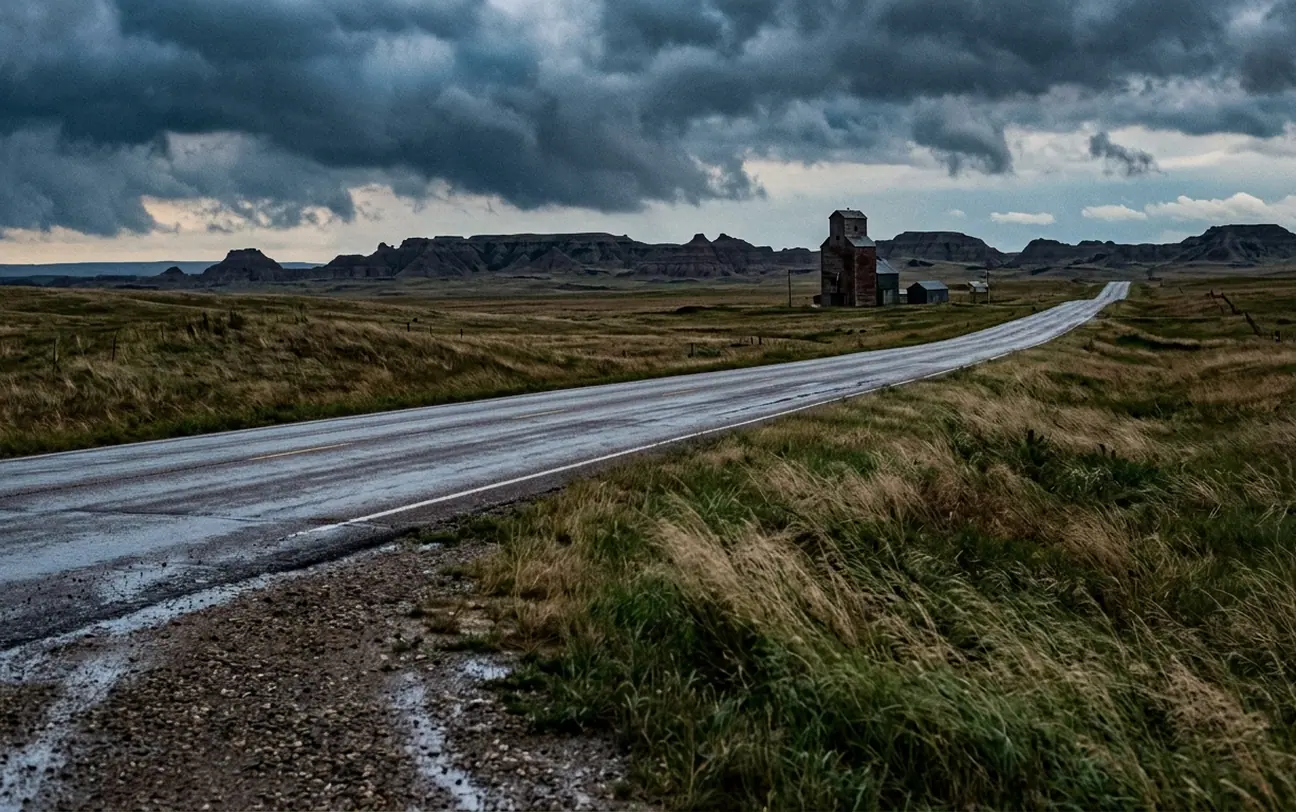
Outside a river town, a driver pauses on a stable gravel shoulder. The engine ticks. Wind presses the grass nearly flat, and a paperback rests face-down on the passenger seat. Beyond the windshield, the highway runs toward a horizon with no services in sight.
For a reader of Kathleen Eagle’s romance novels or other contemporary Western fiction, that distance can give familiar prose a new texture. A character’s drive into town begins to feel different when the next fuel pump lies beyond sight. The practical demands of the region come forward: wind, daylight, road surface, and the distance between places where someone can stop.
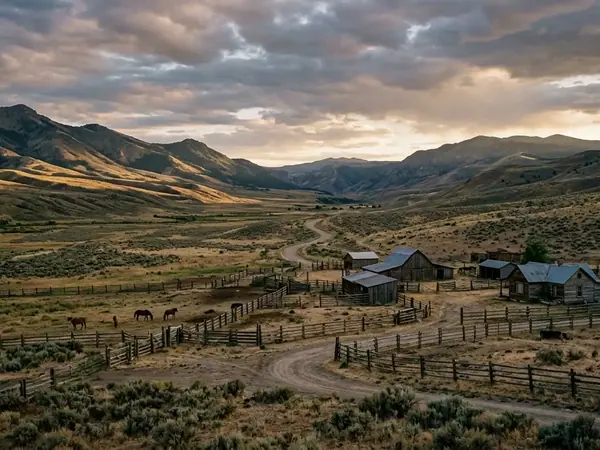
The broad view holds ranches, small towns, and sovereign Lakota and Dakota lands. Fields have gates; homes have approaches; roads cross ground where people live and work. An apparently empty horizon gives a traveler plenty to notice and no reason to assume access.
The day ahead takes shape through a few decisions: choose a manageable leg, read the season, check the rules where the route leads, and leave room for a notebook entry before the engine starts again. The paperback can accompany that process without becoming a map.
Choose the Evening’s Town Before Breakfast
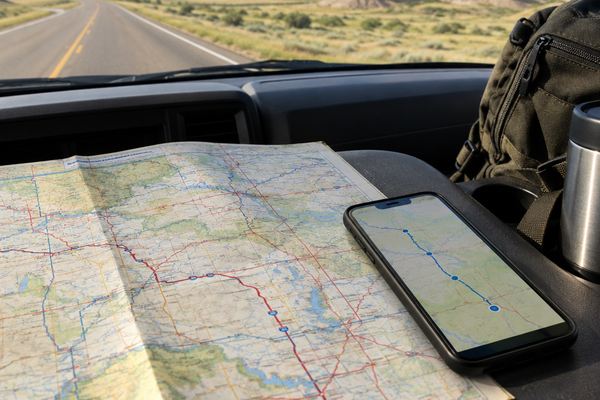
The most useful destination is the town where the driver plans to sleep. Choosing it before breakfast gives the day an endpoint with services and shelter. A printed highway map beside the phone helps the traveler see the whole leg, including the towns between departure and arrival.
A map application’s arrival time offers a clear-weather baseline. The day still needs room for wind, a meal, fuel, and a stop that takes longer than expected. Before leaving town, the driver checks that the intended fuel stop and lodging will be available.
Consider a typical late start after strong morning wind. The traveler keeps a single daylight leg, fills the tank in the departure town, and leaves the optional detour off the day’s route. By afternoon, there is time to stop while the buttes still hold their color. The novel can wait on the seat while the driver watches where the road goes next.
An open fuel station belongs in the plan. Passing it because the gauge seems reassuring can leave a driver searching for the next pump as daylight fades. A rural stretch may exhaust the remaining fuel range and carry the car beyond a phone signal. Reaching the evening’s town with light to spare keeps a closed café or missed turn from becoming an urgent problem.
If the morning delay grows, the traveler chooses a nearer town with suitable services. The revised destination gives the afternoon a workable finish.
Let the Season Set the Prairie Route
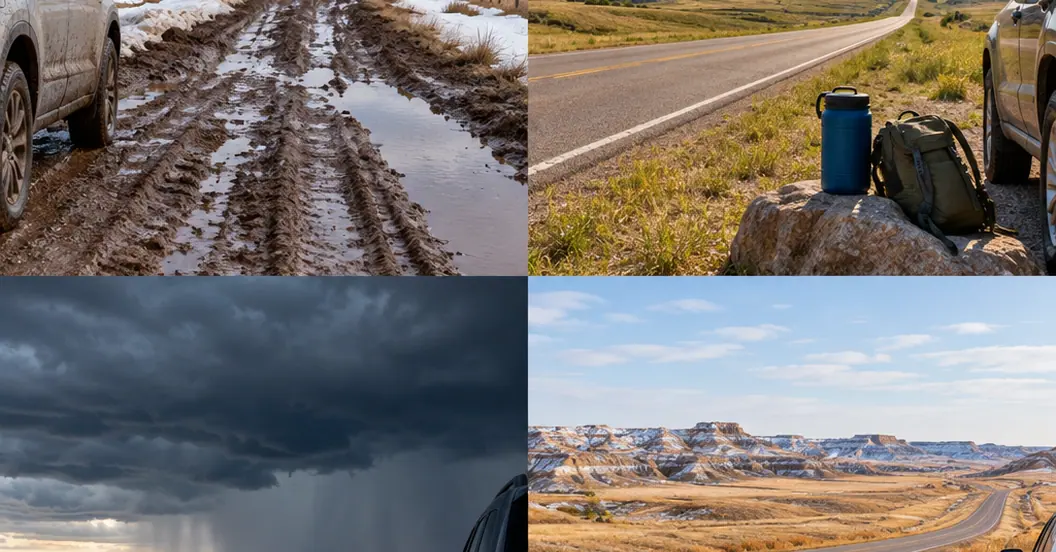
The same highway asks different things of a driver through the year. Spring brings late snow and thawing ground; an unpaved connector can turn to slick clay. Summer heat makes water and a dependable stopping place important, while building storm clouds call for an early decision about shelter.
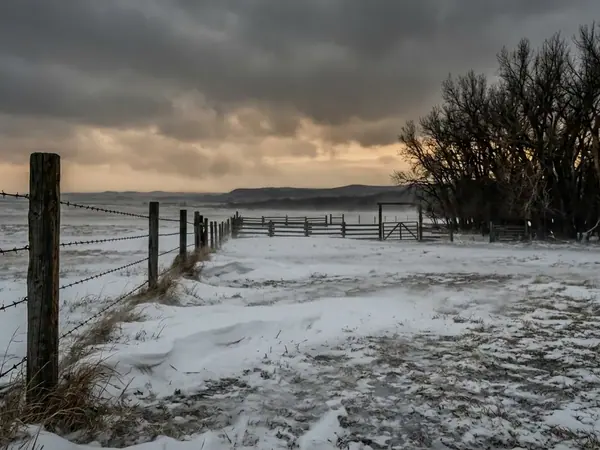
Fall wind can tire a driver through constant steering corrections. Winter adds blowing snow that travels across the pavement and hides the shoulder, even when the road’s direction seems obvious on a map. A route that looks simple over breakfast can demand too much by afternoon.
Pack for a Longer Stop
Water, layers, a blanket, and a paper map belong within reach. The car leaves town with a full tank, and someone knows the intended evening destination. When that destination changes, the traveler passes along the update while a connection is available.
These preparations make sense beside a reading bag. A trade paperback can occupy an unhurried wait; an e-format edition already downloaded can remain available beyond mobile coverage. Keeping the book accessible also helps make a postponed departure feel like usable time.
Fast-building storm clouds, sideways snow, or wet clay on a proposed unpaved route call for a change before departure. The driver stays in town and checks current conditions. An overlook can come off the itinerary without taking anything away from the passage that first made the country interesting.
Check the Nation’s Rules Before the Boundary
Lakota and Dakota lands are sovereign home ground. A traveler approaching a nation’s territory needs to understand what that nation asks of visitors, including those simply hoping to appreciate the country described in Western fiction.
Before the route crosses the boundary, the driver opens that nation’s official visitor information and current notices. The useful questions are concrete: Is the intended road or destination open? Does access require a permit? What photography rules apply? Does a publicized gathering welcome visitors?
A public highway’s passage through tribal land does not itself authorize entry onto side roads, photography, or attendance at a ceremony. That distinction changes the next action: the traveler checks the relevant rules or seeks authorization from the appropriate tribal office before leaving the permitted route.
A reader who notices a ranch entrance resembling a scene in a novel leaves the resemblance on the page. The driver follows posted access rules and takes photographs only where permission allows, including any permission required from people pictured. A home, gathering, or working gate deserves attention to the people responsible for it.
That care preserves a useful separation. Fiction can sharpen a traveler’s attention to place while real communities retain their own names, boundaries, and daily lives.
Leave Three Lines Beside the Paperback
At the next safe stopping place, with the car parked, the traveler opens a notebook beside the book. Three plain lines can hold the day without turning it into a collection of claimed locations.
- Road and sky: Record what happened under the tires and overhead, such as wet pavement, persistent crosswind, or a departure delayed by snow.
- Local expectations: Note what a sign, official notice, or host asked visitors to do.
- Page and place: Name the passage being read and the detail the land made noticeable in its prose, such as the effort behind an ordinary drive into town.
The entry stays close to the day. A fictional ranch keeps its place inside the novel; a real gate keeps the name and purpose of the people who use it.
The final line can record the condition that governed the journey. Badlands names country hard to cross: eroded ground that makes a traveler reckon with the route under the tires.