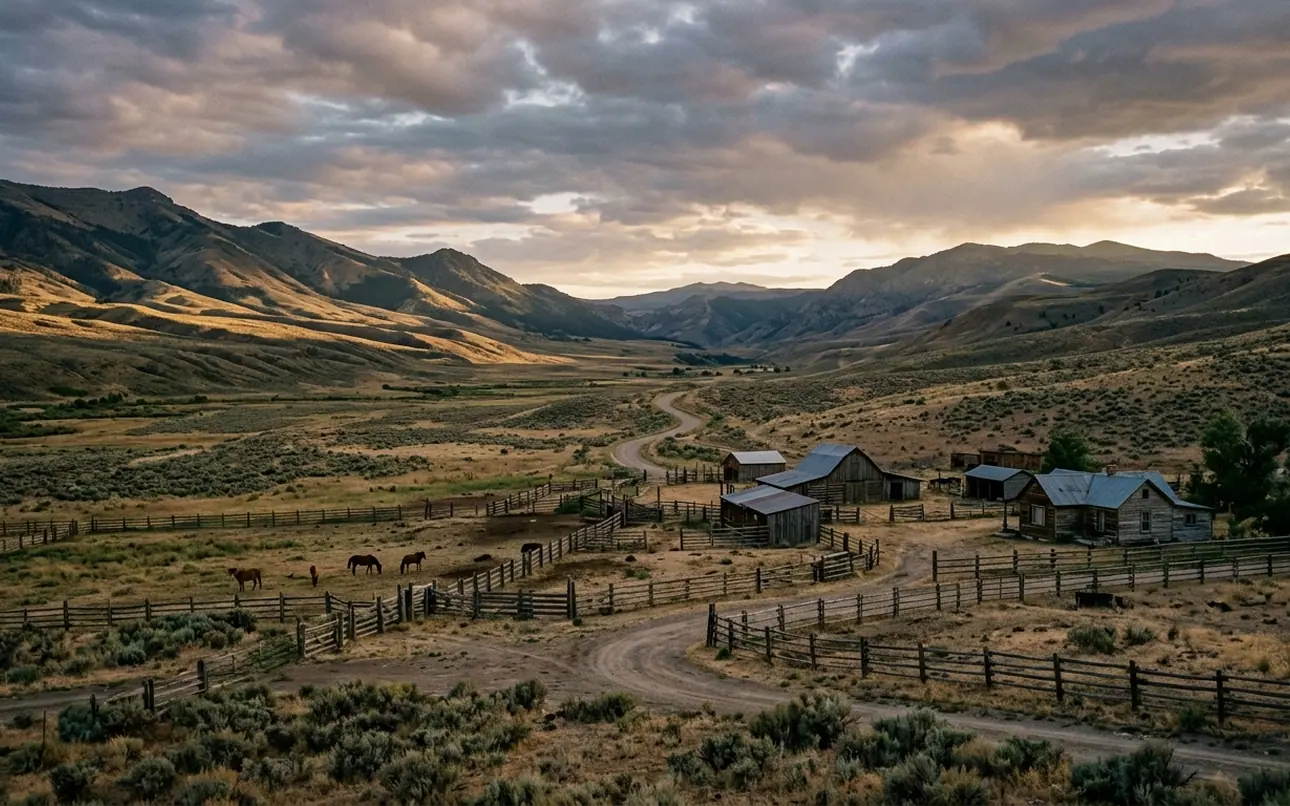
A ranch can look quiet on the page: pasture, barn, distant weather, a road running toward town. Yet Kathleen Eagle builds Western romance from the work beneath that view. Land carries debt, livestock impose deadlines, and a familiar truck outside the café can change how an entire town reads a private conversation.
The most revealing question is often simple: What does this place require from the people who love it?
In this Article
- Why ranch life changes the meaning of romantic choices
- How labor, seasons, and money create narrative pressure
- Where small-town opinion enters the love story
- A practical method for reading Eagle’s Western worlds
What You Lose When Ranch Life Becomes Backdrop
Treat the ranch as scenery and a character’s motives begin to flatten. Reluctance looks like emotional withdrawal. Leaving appears brave by default. Staying can seem sentimental. Once livelihood enters the frame, those judgments grow more complicated.
Consider a character who hesitates to commit while a balloon payment approaches on a land loan. Reading the hesitation purely as old romantic trauma misses the material threat running beneath the dialogue. Marriage could affect ownership, labor, inheritance, and the ability to remain on land held by the same family for years. The quarrel may sound intimate while carrying the weight of a business decision.
A Place-Pressure Reading
I find the clearest method is to log three to five livelihood risks in each chapter over a four-to-six-day reading period. The entries can stay brief: a broken pump, an unpaid bill, an approaching storm, a delayed shipment, a relative asking about the land. Patterns soon emerge between external pressure and romantic behavior.
Read Beneath Reluctance
Before labeling a character guarded or commitment-shy, check whether the text has attached that hesitation to land, debt, care work, or an approaching seasonal deadline.
This approach turns setting into evidence. It clarifies what staying, leaving, marrying, or risking a livelihood would cost.
Daily Textures of the Working Ranch
Physical labor edits conversation. A discussion held before winter feeding has a different pace from one unfolding after miles of fence inspection. People shorten sentences when their hands are cold. They postpone confessions because cattle need water. Tenderness may arrive as a repaired gate rather than a speech.
Winter feeding can begin at about 04:00 to 05:30 AM. A perimeter check may cover roughly 12 to 15 miles of fence line. Those demands explain fatigue, interrupted dialogue, and the narrow windows available for courtship. They also reveal competence. Who notices the empty trough? Who closes the gate without being asked? Who leaves the difficult work for someone else?
Objects That Carry Character
Courtship by Season

Barns, corrals, mudrooms, and kitchens at dawn function as social spaces as much as work spaces. Eagle can place two people beside a coffee pot while the day’s obligations gather outside. Muddy boots at the door suggest respect for the household. Veterinary liniment and wet wool in the mudroom bring animal care into domestic life. A blown tractor tire during a storm turns machinery into a test of patience and cooperation.
Ranch Texture Check
- Muddy boots left at the kitchen door rather than pristine cowboy gear
- The smell of veterinary liniment and wet wool in the mudroom
- Equipment failing at the worst possible moment, such as a blown tractor tire during a storm
These details keep the West tactile. They also show who has time for love and who must make time.
Seasonal Rhythms That Push Plot Forward
Under typical conditions, the ranch year supplies its own narrative clock. A spring calving window may run 45 to 60 days. Haying deadlines fall from late August into mid-September. Branding, shipping, and winter scarcity each impose another sequence of preparation, strain, and consequence.
A city clock can be ignored. Weather and livestock cannot.
Romantic pacing changes sharply with the calendar. Winter feeding allows slow, isolated dialogue in trucks, barns, and kitchens before sunrise. A romance beginning during a 45-day spring calving season depends on brief exchanges between checks, interrupted sleep, and emergencies. The feeling may deepen quickly even when the characters have little uninterrupted time together.
Community gatherings matter for the same reason. A rodeo, branding meal, school event, or church supper may provide the first open social space after weeks of isolation. Such scenes compress observation and opportunity: a couple can meet, quarrel, reconcile, and attract notice within the same afternoon.
Follow the Deadline
- Identify the current ranch season.
- Mark the work that must happen before weather closes the window.
- Notice which romantic conversation the deadline interrupts or accelerates.
- Watch what changes when the work finally ends.
Rural Economies and the Cost of Staying
Money often enters Eagle’s romances obliquely. Characters argue about hiring help, taking town work, renewing a lease, or selling a parcel. Beneath those practical disputes lies a harder question: who can afford to remain?
Cattle futures may fluctuate across a six-to-eight-month market cycle, while land lease renewals can demand calculations spanning 10 to 15 years. The time horizons collide. A household must survive the current season without sacrificing the ground needed for the next decade. The USDA overview of U.S. ranch and cattle production provides useful context for the broader cattle market behind those choices.
Love stories enter that ledger through medical bills, inherited obligations, and off-ranch employment. Hiring help might preserve a relationship by creating time, yet the wage could tighten an already thin margin. Selling land may relieve debt while severing a character’s connection to family history. A proposal made under those conditions carries economic consequences alongside emotional ones.
Mind the Era
Eagle’s economic frameworks reflect Northern Plains and Western ranching communities from the late 1990s through the 2010s. Their specific pressures should not be transferred unchanged to historical or Southern Westerns.
Listen closely when characters say they are being “practical.” The word often holds fear, duty, and attachment at once.
Small-Town Social Codes and Community Gravity
In a small town, romance rarely remains a two-person arrangement. Community opinion acts as a third force, shaping who receives trust, who earns another chance, and whose mistakes remain attached to a family name.
Where Reputation Travels
Track gossip through three or four community hubs: the café, school, church, rodeo grounds, or volunteer fire station. The message changes with each retelling. One person reports an event; another supplies family history; a third predicts what it means. By the time the news returns to the couple, private uncertainty has become public narrative.
Seating arrangements during a two-to-three-hour local rodeo can disclose nearly as much as dialogue. Who sits with an established family? Who remains near the rail? Who crosses the aisle to speak to a returnee? Eagle’s social geography makes belonging visible before anyone names it.
Returnees face a particular strain. They know local codes but no longer occupy their former place automatically. Their time away may suggest ambition to one neighbor and abandonment to another. An outsider must learn the rules; a returnee must renegotiate rules everyone assumes they already understand.
Public Scene, Private Cost
When a romantic exchange occurs in public, note the witnesses. A café apology, dance invitation, or refusal at a rodeo can alter community standing because observers carry the moment elsewhere. Reputation becomes plot through transmission.
Reading Character Through Land and Labor
Romantic choices become clearer after three relationships are mapped: the character’s claim to land, practical skill, and standing within the community. This order slows moral judgment long enough for context to surface.
- Identify ownership. Does the character own land, lease it, expect to inherit it, work for someone else, or stand outside the ranch economy?
- Assess skill. Notice whether competence comes from experience, performance, or borrowed mythology about the West.
- Trace community standing. Read the five-to-seven-year backstory for old loyalties, absences, debts, and remembered mistakes.
- Watch a crisis. Compare responses across two or three sudden weather events. Crisis strips away the posture available in ordinary conversation.
Work as Moral Language
Eagle’s heroes and heroines disclose values through labor. Care for an injured animal can reveal patience. Showing up during a neighbor’s emergency can repair a reputation. Refusing help may express pride, fear of obligation, or a realistic concern about repayment.
The contrast between romanticizing the West and carrying its costs is especially useful. One character sees open land and freedom; another sees fence repair, water access, winter feed, and a lease date. Neither perception is emotionally empty, but only one accounts for the daily maintenance behind the view.
The Fence Line in an Eagle Novel
A place-pressure reading begins with four elements in the opening 15 to 20 pages: weather, unfinished work, money pressure, and the people in town who are watching. The notes can sit beside the novel, whether it is an e-format edition, a Trade paperback, or a title such as A View of the River.
Three place-driven turning points reveal the pattern:
- One seasonal event that changes timing
- One economic decision that raises the cost of love
- One communal moment that alters belonging
Mark Three Turns
Each chosen scene connects place to a romantic decision. A storm alone is atmosphere; a storm that forces two estranged people to protect livestock together becomes structure.
In Eagle’s working West, an unclosed gate can endanger livestock before an unfinished confession changes anything.