A Name You Already Met, Three Books Back
A winter kitchen table, a closed contemporary Western paperback, a pencil beside the cup: then the surname comes back to you. Someone who crossed an earlier Kathleen Eagle novel almost at the edge of the scene has appeared again. You remember the name before you can place the marriage, the sibling, or the household it belongs to.
That recognition is part of the pleasure of connected fiction. A marriage changes the family map; a sibling steps forward from another story; a younger generation arrives with ties you half remember. A clan tree gives those recognitions somewhere to settle. It grows beside the reading stack, ready for a reread or an evening when the book club wants to follow a connection across novels.
I think of the sheet as a small index to remembered lives. Its organizing principle is generation: parents above children, siblings beside siblings, spouses linked across the same tier. Publication order belongs in the notes. Flashbacks and stories spanning generations make it an unreliable substitute for family position.
Keep the tree private and provisional. Its purpose is to help you return to the page with a better question, while preserving the pleasure of discovering who belongs where.
Catch the Kinship Before the Book Returns to the Shelf
The easiest detail to lose is the one that seemed too obvious to write down. Before closing the novel, gather the relationships the prose states: spouses, siblings, parents, children, and cousins. Copy full names as printed, including any surname change that helps identify the person elsewhere.
Give Every Relationship a Return Address
Tuck an index card or loose slip inside the back cover of the active paperback. For an e-format edition, keep an equivalent note beside your reading file. Each entry needs the people involved, the relationship, the book title, and a chapter or scene cue. A cue such as “kitchen conversation” becomes useful when several family exchanges occur in the same chapter.
- Name: Copy the printed form before shortening it on the tree.
- Relationship: Use spouse, sibling, parent, child, or cousin consistently.
- Location: Record the title and chapter, then add a distinctive scene cue.
- Generation: Note where the person belongs relative to an already identified family member.
A short title code keeps the drawing legible. Write its full expansion on the reference sheet, then use that same code throughout. The chapter and scene cue also help when a club member brings a trade paperback with different pagination from another reader’s edition.
Keep “Aunt” Unlinked. An affectionate neighborhood “Aunt” or “Cousin” can name a social bond; leave that person unlinked until the prose explicitly establishes blood or marriage.
Transfer the slip while the final scenes remain fresh. Keep any uncertain wording with its chapter cue so the next reread has a precise place to begin.
Choose a Wide Sheet or a Quiet Digital File
Choose the medium according to what your tree must do. Paper makes a relationship easy to point at across a coffee table. A digital file makes it easier to insert a newly revealed sibling without rubbing out half a generation. Both can preserve the same underlying structure.
Paper Gives the Clan Room
Start with a large sheet in landscape orientation, or tape sheets together along their edges. Draw in pencil and leave generous space between generations. Assign a distinct colored pencil to each founding surname, keeping names readable in graphite. When a marriage joins clans, the connecting line becomes easy to follow without turning every note into a color code.
Keep the relationship symbols consistent even when you use color. Someone following the sheet should be able to trace the marriage or parentage by its marks alone. Leave room at the edges for another branch and beside each name for a book reference.
A File Makes Insertion Easier
In a simple diagram file, give each person a single node. In nested notes, use indentation consistently to indicate the next generation down, with explicit relationship labels beside the names. A spouse needs a stated connection; proximity in an outline can otherwise blur the distinction between partner, sibling, and child.
I favor the version that stays open while reading. An elaborate system left untouched loses to a plain sheet with a surname, a relationship, and a chapter cue captured at the right moment.
Draw Marriages Across and Children Below
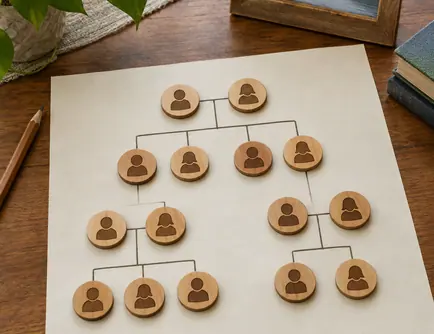
Let the layout carry the family structure. Put spouses on the same horizontal tier, joined by an equals sign. Place siblings side by side within their generation and connect them with a horizontal bracket. Drop a parent-child line toward the generation below. Keep those conventions steady as the sheet expands.
- Place the people identified in the completed book on their generational tiers.
- Draw the stated marriages, sibling brackets, and parent-child connections.
- Add the book reference beside each newly established relationship.
- Check repeated names against their parents, spouses, and generation before merging entries.
A grandfather and grandson can share a given name while occupying different places in the family. Their adjacent relationships help keep their identities distinct. Finish the current book’s entries before moving into the next novel, while those distinctions remain clear.
When a marriage crosses clan colors, draw it once. Attach the establishing book reference to that connection rather than drawing another marriage elsewhere on the sheet. If space forces you to mention a person again, use a pointer back to the original entry instead of creating a second full node.
Let Symbols Carry Kinship. Keep a small corner legend: equals sign for marriage, horizontal bracket for blood siblings, and square brackets around the title code for appearances. An appearance reference records where someone enters the reading record; it does not itself establish a family tie.
This distinction keeps the tree compact. Plot belongs in the novel. The sheet holds the connections that help you find your way back.
Fit the Next Novel’s Branch into the Existing Clan
A new name deserves a search before it gets a new box.
Scan the existing surnames, parent entries, and marriage links first. Then compare the new passage with the chapter cues already collected. A person introduced as an older brother belongs beside the siblings already drawn, even when that introduction comes much later in your reading order.
Add the person at the generation the new book establishes. Keep the family’s structural position separate from the sequence in which you learned about it. That separation lets the tree remain readable while the source notes preserve the book-by-book experience of discovery.
Use a soft graphite pencil and keep an eraser nearby. If a later passage changes the placement, move the connection and retain both references beside a question mark until you reread them together. Date the update and include the book title, so you can trace when the branch entered your notes.
The habit is simple: catch the mention, draw the stated tie, then audit the existing tree before expanding it.
Choose One Clan Line for the Next Meeting
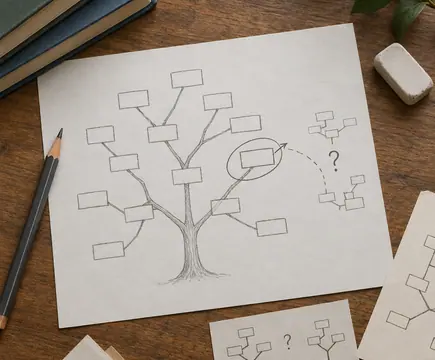
Before a reread, open the tree beside the novel. A walk-on uncle becomes easier to place when his sibling connection is already visible. Keep your eyes on the scene itself; the sheet can hold the family structure while you return to the conversation, setting, and emotional stakes.
For book club, flag a single marriage or sibling line to follow together. Trace who married in, which siblings connect the books under discussion, and which chapter the group wants to revisit. Keep the rest of the chart folded back if it reaches beyond the novels everyone has read.
Tonight’s task can stay small: take the Kathleen Eagle novel you just finished, collect its explicit kinships, and add those marks to the sheet. Which branch will you draw first so your group can follow it back to the page?