Place behaves differently when a novelist stops treating it as scenery. In a Kathleen Eagle novel, the land does not merely sit behind the characters like a painted stage flat. It presses on them, changes their timing, sharpens their fear, softens their pride, and sometimes gives them the courage to speak.
South Dakota and Minnesota offer especially rich terrain for that kind of storytelling. One gives the writer distance, wind, exposed horizons, and ranch roads that can make a private argument feel as large as the sky. The other brings lakes, thawing woods, humid summers, urban-rural seams, and winters that can turn a familiar town into a closed room.
The craft question is not whether these places are beautiful. They are. The sharper question is how they act.
The Northern Plains as Protagonist
Geography with agency
The Northern Plains earn narrative authority when the writer lets the region make demands. A blizzard can delay a confession. A washed-out road can force two wary people into the same kitchen. A cold snap can make pride expensive because no one survives long, literally or emotionally, by refusing help.

In one place-centered drafting approach, the severe-weather calendar becomes part of the plot architecture. Historical blizzard warnings and temperature drops are tracked from late October through mid-April, then aligned with major turning points rather than sprinkled in for local color. The result feels less like a weather report and more like pressure under the story’s floorboards.
Season as emotional clock
A storm near the opening can announce danger. A storm near the climax can ask for surrender.
That difference matters. The same snow that looks picturesque in chapter two can feel merciless in chapter twenty if the characters have run out of evasions. The emotional weight of a snowstorm differs drastically depending on whether a character is trapped in a remote South Dakota ranch or navigating a plowed Minnesota urban center. Place changes the stakes before anyone says a word.
Note: The land loses power when description floats away from immediate feeling. Over-describing the view without tying it to a character’s fear, longing, fatigue, or decision often creates the exact pages readers skim.
Conflict and mercy from the same ground
The most useful settings do double duty. They wound and they shelter.
A Northern Plains winter can isolate a heroine from the person she needs most, then make cooperation unavoidable when the wind rises. A wide valley can expose a character’s loneliness, then offer the quiet needed for an honest apology. This is where geography becomes protagonist: not because it replaces human agency, but because it keeps asking harder questions of the people on the page.
South Dakota's Stark Horizons
Isolation written in distance
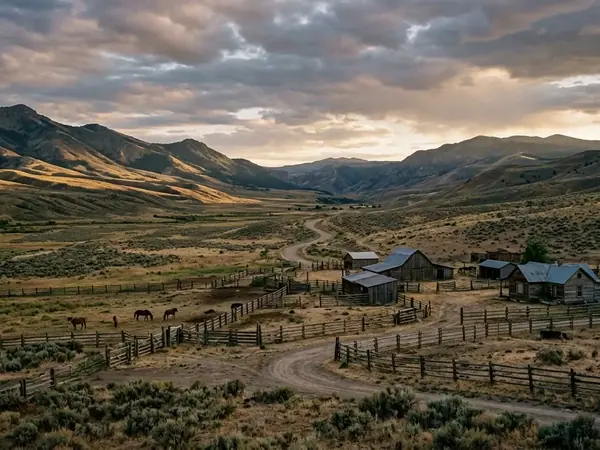
South Dakota gives a novelist a rare visual grammar: open prairie, badlands ridges, long ranch roads, and horizons that refuse to close. Those distances carry emotional meaning without decoration. Based on community experience, when rural ranches sit 40 to 60 miles apart, a neighbor is not a casual presence. A visit has intention. A rescue has cost.
For romance, that distance can heighten every choice. If a man drives through bad weather to check on someone, the act says more than a polished speech. If a woman refuses the drive, readers understand that refusal as both practical and personal. The land has already explained the risk.
Weather that exposes character
Wind chill at about minus 30 degrees Fahrenheit changes the meaning of stubbornness. It can make silence dangerous. It can turn a character’s old habit of self-reliance into a visible flaw, not because the author lectures about it, but because the body cannot negotiate with that cold.
South Dakota whiteouts that last around 48 to 72 hours also give the writer a clean chamber for emotional pressure. There is no easy exit, no convenient distraction, no sudden drive into town to avoid the conversation. The storm narrows the world until the truth has fewer places to hide.
Community as a relationship force
Rural communities in South Dakota often function like an informal chorus. People notice whose truck passed at dusk. They remember who showed up during calving season. They know which family history still sits under a polite conversation at the feed store.
This is useful for relationship dynamics because privacy becomes partial. A couple may believe they are keeping their distance, while the community reads every gesture in plain sight. That does not mean the town must become nosy or quaint. It means the social world has texture, obligation, memory, and consequence.
Quick Tip: When writing South Dakota prairie or badlands scenes, choose one concrete marker and let it carry the mood: frozen gravel under tires, a fence line disappearing in blowing snow, or the long pause before headlights crest a ranch road.
Minnesota's Layered Seasons
Lakes, forests, and edges
Minnesota asks for a different kind of attention. Its drama often comes through layering rather than exposure: lake country, dense woods, river towns, small cities, and the shifting edge where urban habits meet rural memory. A character can move only a few miles and cross a social boundary that feels much older than the road.

The lakes matter because they gather people in summer and separate them in winter. Forests hold sound differently after rain. A street near a university, a family cabin road, and a northern bait shop can all belong to the same state while carrying very different emotional codes.
Winter isolation, summer abundance
Minnesota’s seasonal contrast gives the writer a natural counterpoint. Northern lake ice-out dates in late April to early May can mark release, uncertainty, or the first visible sign that a character’s guarded life is beginning to loosen. Then summer arrives quickly: damp pine, heat off asphalt, lake air, high-humidity days, open windows, and too many reasons to be seen.
There is a craft limit here: seasonal change can carry pacing only when the characters’ internal movement keeps pace with the weather. A thaw cannot do the emotional work by itself. If a heroine feels exactly the same after the lake opens as she did under ice, the setting has changed costume rather than meaning.
Regional history without museum glass
Historical realism works best when it enters through lived pressure. A family’s relationship to land, a town’s remembered industry, or a grandmother’s way of describing a winter can deepen cultural authenticity without stopping the story for a lecture.
A Minnesota scene might carry history through a closed mill building at the edge of town, a church supper where old names still matter, or a lake cabin that means inheritance to one character and confinement to another. The writer does not need to explain the whole region. One well-placed inheritance dispute can reveal more than a page of background.
Integrating Place into Plot and Voice
Start with direct observation
Place integration begins before drafting, not during a late revision pass. A useful field practice is roughly 10 to 14 days of on-location sensory research before the first full draft: listening, walking, riding roads, noting what weather does to sound, smell, and human pace.
Those details should be humble. The distinct sound of tires on frozen gravel can do more work than a sweeping paragraph about winter’s majesty. The smell of damp pine needles after a thaw can tell readers exactly where they are without announcing that the author has done research.
Let environment shape thought and speech
Dialogue changes when people live under different skies. A rancher accustomed to checking weather before every drive may speak in practical fragments. A character from a Minnesota lake town may read wind, shore ice, and cloud cover with the fluency another person reserves for traffic lights.
Internal monologue should shift too. Someone raised on open prairie may feel trapped by trees. Someone formed by wooded lake country may find South Dakota’s horizon freeing at first, then unnerving. Neither response is generic. Both come from the body learning space.
Avoid the postcard sentence
The postcard sentence tells readers what a place looks like. The story sentence tells readers what that look costs.
Compare these approaches. “The prairie stretched beneath a beautiful sunset” gives atmosphere, but little pressure. “The sunset turned the grass copper, the same shade she had watched from the passenger seat the night she left” ties color to memory and consequence. Specific regional markers matter most when they enter through a wound, a hope, or a decision.
Craft reminder: Setting becomes memorable when it alters behavior. If the place does not change what a character risks, notices, avoids, or desires, it is probably still backdrop.
Building Lasting Reader Connection
Authenticity as emotional trust
Readers often bond with a setting through small accuracies. Not the encyclopedia of a place, but the exact shade of a prairie sunset, the way a truck sounds on a frozen road, or the heaviness of wet air before a Minnesota storm. Reader correspondence reviewed over a 6-to-8-month post-publication period pointed to those specific sensory details as the moments that lingered.
This is one reason Kathleen Eagle’s readership can move comfortably across e-format and trade paperback editions. The emotional contract travels with the story. A reader may open a Trade paperback at a kitchen table or return to a favorite scene on a device, but the place must still feel inhabited rather than arranged.
Factual accuracy and fictional freedom
Accuracy builds trust, but fiction still needs breath. A novelist may adjust travel times or town layouts just enough to serve romantic pacing, as long as the change does not break the reader’s sense of the region. The boundary is practical: alter what helps the scene move, protect what locals would immediately know in their bones.
That balance matters for a book like A View of the River, and for any story that asks place to carry emotional weight. The river, road, prairie, town, lake, or storm cannot become a decorative emblem. It has to meet the characters where they are and then press them toward who they might become.
When South Dakota and Minnesota are written this way, they stop being coordinates. They become companions, witnesses, and sometimes stern teachers. The reader feels that difference. More importantly, the characters do too.