A Latigo Already Knows Who Has Standing
In Kathleen Eagle’s Western romance, a worn latigo, a branding-week roster, a seat beneath the powwow arbor, and a truck outside the cafe can establish belonging before anyone speaks. These physical details give a scene its first social arrangement: someone belongs at the work, someone has arrived as a guest, someone remains at the edge. Dialogue enters a world already occupied by obligations.
The latigo makes a useful starting point. A strap softened by use carries a different suggestion from leather that still looks fresh from the store. Put either beside a character’s confident introduction, and the reader has something to weigh against the words. The setting supplies evidence; the conversation may confirm it, complicate it, or expose a gap.
An attentive reading follows four object-classes through Eagle’s published Western romance: horse tack, seasonal work, gathering places, and roads or vehicles. Each asks a particular question. Who has spent time here? Who owes a day’s labor? Who expects a place among others? Who receives recognition on the way home?
The focus stays with literary craft. These observations offer a way to read the physical world of Eagle’s fiction, rather than instructions for ranch work or a guide to living tribal and powwow practice. The reward is a closer encounter with the romance itself, where knowing someone’s place can become part of learning how to love them.
What the Bridle, Latigo, and Saddle Tell First
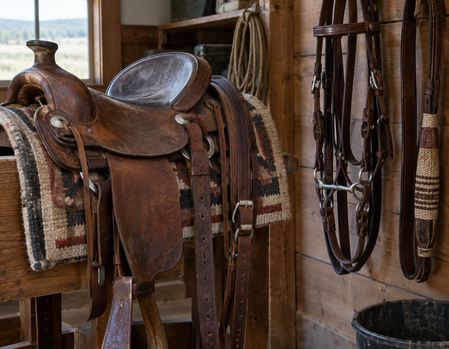
Begin with the equipment the prose actually notices. Daily-used leather, borrowed tack, and a too-new outfit suggest different relationships to a ranch. A repaired stitch asks the reader to consider care. A sweat-darkened saddle skirt suggests repeated use. A bit chosen to suit the horse directs attention toward the animal’s needs and the rider’s judgment.
Read those details together. Matching equipment may suggest familiarity, while an awkward combination can raise the possibility of borrowing or making do. Yet a mismatched piece with a careful repair can carry more practical authority than a pristine set. The useful distinction lies in the relationship among person, equipment, and task.
Consider how a repaired strap changes an introduction. If the narration pauses over the repair before a character claims to know the work, the reader can test that claim against visible care. Does the character notice strain or fit? Does someone else trust that person with the horse? These are questions to bring to the passage, without supplying actions the page never gives.
New leather alone cannot settle character. It might belong to an experienced hand replacing worn equipment. Wear likewise establishes a history of use without identifying everyone who contributed to it. Treating physical details as interpretive clues asks the surrounding action to support the inference.
Read the Repair
When Eagle pauses on a latigo, cinch, or repaired strap, name the possible social fact before continuing: expected hand, visitor, borrower, or someone dressing the part. Then let the next exchange test that reading.
Equipment care can carry more weight than self-description. In a romance, that matters because a small act of attention offers another character something observable to trust.
Branding Week as a Community Calendar
Branding season gives a chapter a clock and a roll call. Work must happen within a seasonal window, and people arrive carrying different obligations. A neighbor returning help occupies a different position from paid seasonal labor. Someone who arrives late enters a morning whose arrangements others have already made.
Follow the sequence through objects: ropes ready for use, cattle in holding pens, irons awaiting the next task. Weather can press on that sequence, tightening the time available or changing what the crew can accomplish. These details let the reader track urgency without needing a narrated timetable.
The work roster also distributes trust. Watch who receives an assignment without discussion, who waits for direction, and whose absence draws notice. A missing person may remain socially present through the work someone else must cover. That is a particularly revealing form of belonging: the community has already counted on a contribution.
Across Eagle’s Western novels, seasonal labor helps make relationships visible. It does not establish a fixed calendar for every fictional ranch, and a single task cannot resolve a character’s whole standing.
For a closer reading, hold the work scene beside the conversation that follows. A request made after shared labor may carry the weight of an existing obligation. The same request from an unexpected arrival may require explanation. Branding week gives apparently simple dialogue a history of favors, effort, and remembered attendance.
Notice, too, who can leave when the work ends. Remaining to put things away may extend a relationship beyond the visible center of the scene.
Seats, Arbors, and the Edge of the Powwow Grounds
At the powwow grounds, position becomes a kind of grammar. A character approaching along the road, waiting in the parking field, standing near food stands, or sitting beneath an arbor occupies a distinct place in the scene’s arrangement. The reader learns through movement as well as description.
Follow one character’s route. Where does the narration slow down? Who acknowledges the arrival? Does the character know where to go, or pause until someone offers company? A folding chair can become a small but consequential object when its placement reveals an expectation of being joined.
Distance from the center needs careful reading. An outer bench might hold a newcomer, someone waiting for family, or a person choosing a quieter vantage. Proximity alone cannot explain the relationship. Combine position with recognition, invitation, and the character’s own attention.
Drum, regalia, giveaway, and food stands can carry community meaning within the fiction, but they do different narrative work. A food stand may bring people into conversation; a giveaway may direct attention toward relationships of giving and receiving. Read the detail within its particular passage, allowing the scene to establish its significance.
These observations concern how Eagle’s fiction marks relationship to community. They offer no instructions for attendance, ceremonial protocol, or speaking for any nation. Keeping that distinction clear makes room for a more attentive literary question: whose understanding organizes the scene, and what does that perspective allow the reader to notice?
For the romance, recognition may begin quietly. Someone makes room. Someone waits at the edge. Someone’s arrival changes where another person chooses to sit.
Pickup Trucks, Cafe Counters, and Reservation Highways
A pickup carries relationships along with its load. Whose keys open it? Does its condition suggest a workday or a trip into town? What remains in the bed, and who recognizes the vehicle before its driver steps out? These questions connect an apparently ordinary arrival to the life beyond the immediate scene.
Work-dirty and washed-for-town suggest different occasions. Neither settles a person’s identity. Instead, the contrast can reveal preparation: a character has come directly from a task, made an effort for an encounter, or borrowed a vehicle that others associate with someone else. The truck brings those possibilities to the curb.
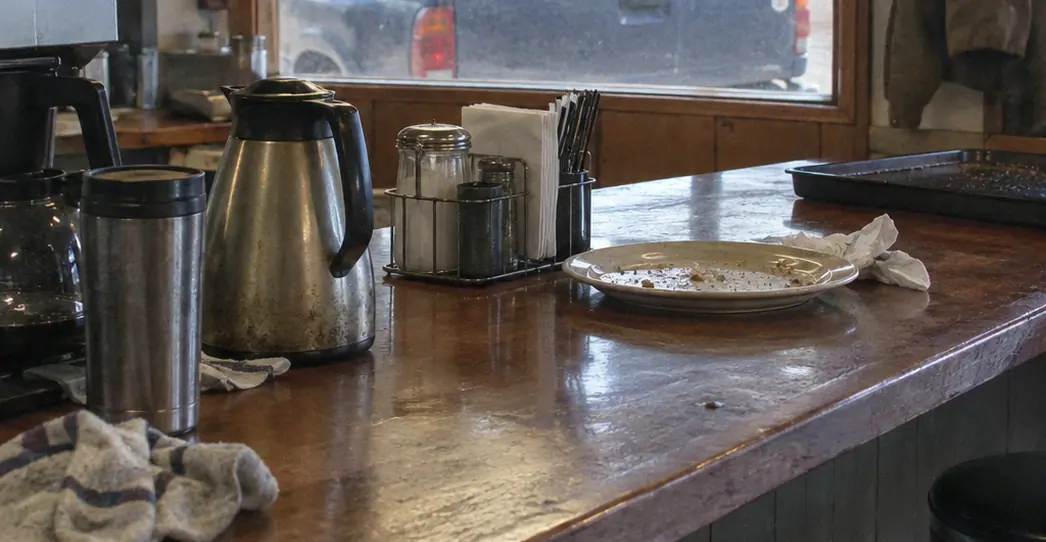
The roadside cafe counter continues the reading. An inquiry about family places a customer within a remembered network. A menu and a courteous greeting leave more to be established. Listen for what the speaker assumes the other person already knows: a relative’s whereabouts, unfinished work, or the reason for a return.
Courtesy alone tells little about intimacy. The sharper clue is recognition, especially when it reaches beyond the person sitting at the counter. A question about someone at home can attach that brief stop to a much larger set of relationships.
The reservation highway gives those exchanges distance and direction. A drive can connect ranch, gathering grounds, and town while crossing jurisdictional boundaries. Read where the journey begins and where it ends, then notice whether the character experiences the route as departure, routine passage, or return.
The road deserves the same attention as the destination. A familiar vehicle approaching a familiar stop may carry an expectation of welcome; a return journey may bring an unresolved encounter home. Across that truck-cafe-highway sequence, movement becomes a social fact, with consequences waiting at the next door.
Run One Chapter as a Field Pass
Choose one chapter and pause before a substantial dialogue exchange. Keep the notes brief enough to fit beside the page. The aim is to preserve what the physical setting has already suggested before speech draws attention elsewhere.
- Record one tack detail. Note a bridle, saddle skirt, latigo, or other piece the passage actually names. Describe its condition, then write the relationship it might imply: familiarity, borrowing, care, or display.
- Record one seasonal-work marker. Look for a task, a roster, waiting equipment, weather pressure, or an expected arrival. Ask who carries an obligation and who relies on it.
- Record one gathering-place position. Locate the character in relation to other people. Note any invitation, acknowledgment, hesitation, or movement that gives the position meaning.
- Record one vehicle or road detail. Follow keys, cargo, recognition, direction, or destination. Write down whose relationships travel with the character.
A chapter may leave one of these categories empty. Keep that space open rather than importing a detail from another scene. An absence in the notes protects the distinction between what Eagle places on the page and what a reader expects to find there.
Belonging Leaves Traces
Gear shows time on the place. Branding week reveals who is obligated. A seat at the grounds suggests who is expected. The truck, cafe, and highway show who receives recognition on the way home.
Now reread the conversation beside those notes. Mark the moment when speech confirms an inference or requires a revision. A confident introduction may gain substance from careful equipment use; a casual greeting may deepen when the earlier scene has shown how much an arrival matters.
In the chapter open before you, whose claim to belonging will you trust: the character who announces it, or the one whose place the objects and other people already acknowledge?