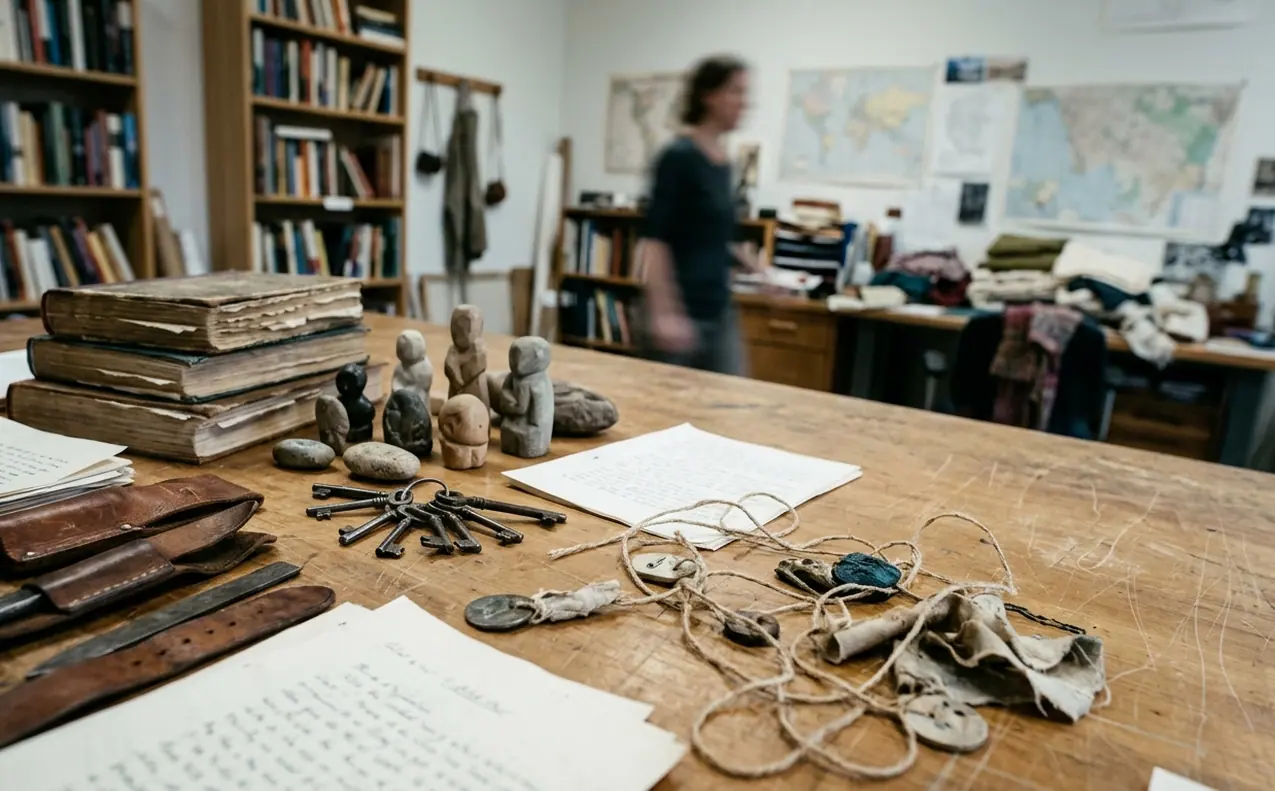
Kathleen Eagle’s novels often look, at first glance, like separate doors: one ranch, one family, one love story, one trade paperback pulled from the shelf on a quiet afternoon. Read that way, each book still carries its own weather. But the deeper structure lives in the crossings: repeated surnames, reservation boundaries, old ranch roads, and secondary figures who step forward years later with a fuller claim on the page.
I think of these books less as a straight series and more as a set of narrative territories. The question is not only “Which book comes next?” It is “Which place remembers what happened before?”
What This Reading Map Covers
- What readers miss when settings stay separate.
- How reservations and ranches anchor the shared worlds.
- Why secondary characters matter across titles.
- How to group novels into narrative clusters.
- A practical reading map built from one starting title.
What You Miss When the Settings Stay Separate
When a Kathleen Eagle novel is read in isolation, the love story remains intact, but some of its pressure vanishes. A father’s silence, a cousin’s guarded loyalty, a ranch hand’s sudden importance: these details may read like atmosphere in one book and lineage in another.
The emotional arc sits below the plot
Plot summaries flatten this kind of fiction. They tell you who meets, who resists, who reconciles, and who chooses love. They rarely tell you that a recurring family has been gathering narrative weight for roughly 12 to 14 years of backstory development, especially in lines such as the High Bulls.
The useful unit is not the chapter. It is the mention.
A passing reference to an aunt, a remembered marriage, or a neighboring spread can carry forward into a later title. Tracing secondary character mentions across multiple texts reveals family ties that stretch across decades, not just across pages. That is why the shared world feels lived in rather than assembled for convenience.
Settings behave like memory systems
Between the 1993 and 1997 releases, background references show a continuous, evolving timeline rather than a collection of static western settings. The same reservation road or ranch boundary does more than locate a scene. It stores consequence.
Summary: If you only read for the central couple, you get the romance. If you read for recurring places and names, you get the larger architecture that gives the romance its inherited weight.
Core Reservations and Ranches That Anchor the Series
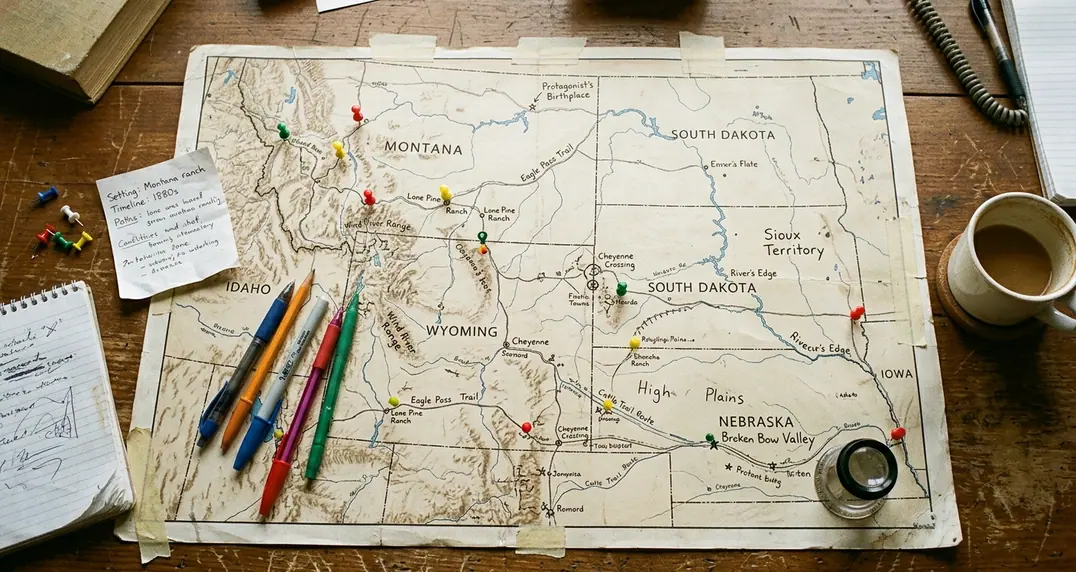
The recurring geography matters because Eagle’s shared novel worlds are not vague “western” backdrops. They are structured around reservation communities, ranches, roads, and family-held land. Each one gives the fiction a social map.
Reservation communities create continuity
Specific fictionalized Dakota reservation communities recur with enough consistency that readers can track spatial relationships from book to book. Landmarks, roads, and community boundaries help establish where families belong, where they cross lines, and where older conflicts remain visible.
One mapping approach cross-referenced geographical landmarks mentioned in the novels against historical maps to test whether the internal relationships held together. The point was not to turn fiction into survey work. It was to notice how carefully place organizes kinship, obligation, and return.
Ranches function as social hubs
The fictional Black Sun Ranch is the clearest kind of anchor: about a 4,500-acre spread bordering the reservation. A ranch of that scale can plausibly hold multiple narrative functions at once. It can be workplace, inheritance, refuge, source of conflict, and neutral ground where characters from different books pass through the same social field.
That is the difference between a setting and a hub. A setting hosts a scene. A hub gathers people who do not yet know they belong to the same larger story.
History is layered into the land
The internal timeline attached to these places stretches from the 1890s historical era through the 1996 to 1999 contemporary releases. That range matters. It lets the land carry more than backdrop; it carries settlement, dispossession, family continuity, and the long shadow of choices made before the contemporary protagonists arrive.
Note: This mapping method is strongest for the contemporary reservation-linked continuity. It becomes less useful with standalone historical romances, where recurring modern reservation and ranch networks do not provide the same connective tissue.
How Characters Travel Between Titles
Characters travel quietly at first. They appear as cousins, ranch hands, siblings, neighbors, old friends, or names mentioned at a kitchen table. Then, in another book, the narrative light changes.
Secondary figures are often delayed protagonists
A minor character introduced as a ranch hand in a 1994 release becomes the primary protagonist in a 1998 title. That shift is not merely a pleasant recognition effect. It creates around a 4-to-5-year internal timeline gap between appearances, which means the character has had time to gather unseen experience.
Readers who remember the earlier role bring that memory into the later book. The protagonist no longer enters as a stranger. He arrives with residue.
Family trees make the hidden structure visible
Lineage is the cleanest way to follow the shared world. Siblings, cousins, and in-laws often explain why one book feels emotionally adjacent to another even when the plots do not repeat. A family tree matrix, built from surnames and relationship clues, can reveal that two stories are not sequels in the conventional sense but neighbors inside the same generational structure.
- Track surnames before first names, because surnames carry family continuity across decades.
- Mark kinship terms exactly as they appear: cousin, brother, aunt, grandfather, stepfather.
- Note whether a character appears in scene, in memory, or only by reputation.
- Separate friendship ties from blood ties; Eagle often uses both to bind books together.
Common mistakes in character tracking
The easiest mistake is assuming two characters with the same first name in different decades are the same person rather than a generational namesake. In family-centered fiction, repeated names often signal inheritance, grief, honor, or cultural continuity. They do not always signal identity.
The second mistake is treating background figures as decorative. In this body of work, a background figure may be a future center of gravity.
Quick Tip: When a secondary character receives a surname, a family role, and a specific place connection, mark the name. That combination usually deserves a second look.
Which Novels Belong to the Same Narrative Universe
Clear clusters emerge once settings and recurring names are mapped together. The clusters are not always the same as publication order, and they are not always announced as a formal series. They behave more like narrative neighborhoods.
Grouping by anchors instead of labels
A practical grouping method starts with two anchor types: recurring surnames and specific geographic points. If a title shares both, it likely belongs near the same cluster. If it shares only one, keep it in a secondary ring until another connection confirms the relationship.
Under typical conditions, using that approach, the map usually resolves into a few distinct narrative clusters across 15 to 18 interconnected novels published between 1989 and 2004. The exact boundaries can shift slightly depending on whether one privileges family lineage, reservation geography, or ranch continuity.
Generation and publication order do different work
Some titles share the same generation. Others advance the timeline. A publication-order reading lets you hear the author’s evolving style, especially across e-format editions and older trade paperback releases. A chronology-first reading lets you follow families as their histories deepen.
The best reading order changes sharply depending on the reader’s purpose. If you want emotional inheritance, follow family lineages. If you want to watch Eagle’s craft develop across time, follow release order. If you want place-based immersion, begin with the ranch or reservation that recurs most visibly in the book already in your hand.
A simple grouping test
- Write the title at the top of a page.
- List every recurring surname you recognize.
- List every ranch, reservation, town, river, or road named with specificity.
- Check whether another title repeats both a surname and a place.
- Place strong matches in the same cluster and weaker matches in a nearby ring.
Build Your Own Reading Map Using One Title as Starting Point
You do not need a master bibliography to begin. Pick one Kathleen Eagle novel, preferably the one already on your shelf, and let that book generate the map. A reader-guided method starts by extracting every capitalized proper noun from the first three chapters: people, ranches, reservations, towns, family names, and named landmarks.
How to build the first index
Set aside 20 to 30 minutes per book. Use a notebook, a spreadsheet, or the blank page at the back of a trade paperback if you are comfortable marking reading notes elsewhere. The method is deliberately simple because the pattern recognition matters more than the tool.
- Select a starting novel and read the first three chapters.
- Log every mentioned ranch, reservation, and secondary character surname in a reading journal.
- Cross-reference your logged surnames with the character lists or notes you make from other titles.
- Circle any place-name that appears in more than one book.
- Create a sequence that follows the strongest thread first: family, ranch, reservation, or publication date.
Cross-referencing a single novel’s index often yields several direct connections, usually 3 to 5, to other titles in the author’s catalog. That is enough to choose a path without turning the reading experience into clerical work.
What to avoid while mapping
Do not force every title into one master continuity. Eagle’s catalog includes standalone historical romances, contemporary reservation-linked books, and novels whose affinities are tonal rather than structural. A map should clarify the reading, not flatten it.
Do not start with a complete system.
Start with one thread and follow it until the pattern earns your trust. A View of the River, for example, can serve as a starting doorway if that is the title nearest to hand. Open the first three chapters and make four columns: People, Families, Places, and Possible Links. As you read, enter every capitalized surname under Families, every ranch or reservation reference under Places, and every secondary character who receives more than a passing description under People.
A worked example you can copy
Here is the whole exercise in miniature. Begin with A View of the River. Read chapters one through three without stopping for interpretation. On the second pass, log the named locations and every secondary surname. If Black Sun Ranch appears in your notes, place a star beside it because around a 4,500-acre ranch bordering the reservation has enough narrative gravity to connect outward. If a High Bull family reference appears, place it in the Families column and leave two blank lines beneath it for later relatives, cousins, or generational namesakes.
Now choose your next book by the strongest repeated element. If another title repeats the ranch, read that next for place continuity. If another title repeats the High Bull surname, read that next for lineage. If both repeat, put it at the top of the stack. After two books, copy the shared names onto a clean page and draw a line from each person to the ranch or reservation where they most often appear. By the third title, your reading order is no longer borrowed from a list; it is built from Eagle’s own geography of memory.