The Love Is Already Settled Before Anyone Raises a Voice
Across Kathleen Eagle’s contemporary Western backlist, the unperformed hour carries the love story: a meal, a chore, a drive during which two people begin to make room for each other. The later declaration gives that attachment a public shape. Long before it arrives, ordinary conduct has made the attachment credible.
That is a reading of the novels themselves, offered to readers returning to Eagle’s shelves. Its evidence lies in the distribution of attention: who stays, who listens, who keeps working when conversation becomes difficult. A useful benchmark emerges from those small decisions. Can these people sustain a shared task without demanding an immediate emotional reward?
Three recurring spaces bring that question into focus: the kitchen table, the barn aisle, and the pickup cab after town drops away. This reading stays with contemporary Western stories grounded in ranch routines and plains travel; its conclusions belong to that setting rather than every book the author has written. The discussion also leaves each novel’s resolution untouched.
Coffee, a Scarred Table, and the Sentence Nobody Performs
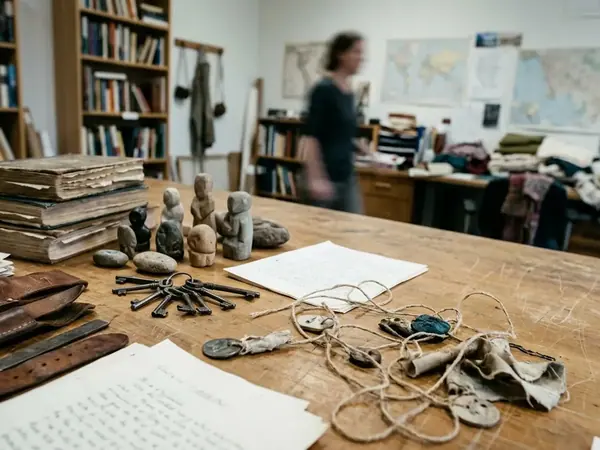
The kitchen table reduces the available gestures. Two people sit across worn wood; coffee cools between them; neither has a crowd to persuade. Practical language acquires weight because the scene gives it so little cover.

Late Coffee in The Night Remembers
In The Night Remembers, the two leads’ late-night coffee provides the domestic frame. Pouring and sitting establish a modest shared occupation before the exchange asks anything larger of them. Attention can move between the cup and the person opposite, allowing a difficult sentence to arrive without the staging of a formal confession.
Watch the practical exchanges here. A brief sentence leaves room for an answer; a speech can occupy all the available space. That difference matters when trust depends on whether someone will hear an uncomfortable response and remain at the table.
Household Papers in The Last True Cowboy
The Last True Cowboy offers the companion example of household papers sorted across a table, with coffee going cold between the leads. The papers supply a reason to remain together. They also give the conversation an external rhythm: attention returns to the work rather than building continuously toward a declaration.
These scenes invite a precise reading question: what does the next ordinary sentence permit? Sometimes its achievement is simply continued conversation. Eagle makes that continuation substantial by keeping the exchange private and the task recognizably mundane.
Barn Work That Keeps Two People in the Same Weather
Shared labor sets a different standard. At a table, attention can rest on speech; in a barn, an animal or an unfinished repair competes for it. Feeding, mucking, haltering, and holding a gate require coordination even when the people involved have no ready language for their attachment.
Working Proximity in Sunrise Song and What the Heart Knows
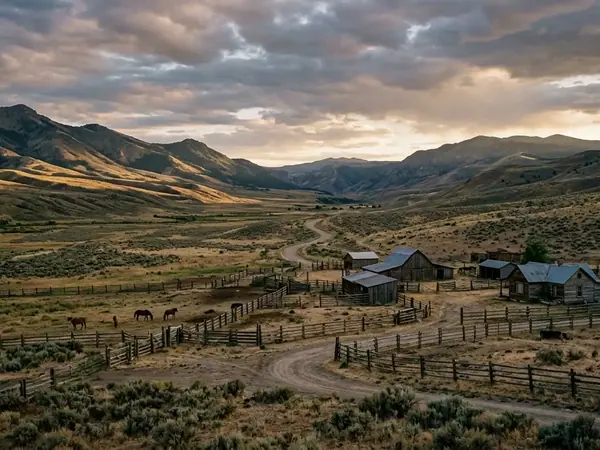
The barn passages in Sunrise Song and What the Heart Knows belong together under this lens. Their shared-work situations encompass handling colts, clearing stalls, and bracing a sagging gate, with cold plains mornings and late-autumn weather setting the pace. The leads occupy the same working space because the chore requires their attention.
Keeping those tasks in view protects the reading from turning every movement into a symbol. A gate needs support. An animal needs handling. The physical requirement comes first; the romantic significance grows from how two people meet it.
Side-by-side work therefore supplies a demanding measure of compatibility. Each person must notice the other’s position, adjust a movement, and finish something whose urgency continues through an awkward silence. The scene tests the practical shape of a shared life without asking either lead to describe that life in advance.
Weather tightens the test. Cold and approaching storms restrict the leisure available for self-explanation. Under those conditions, considerate action carries particular clarity: someone makes the work possible for someone else.
The Cab of the Truck After the Town Lights Drop Away
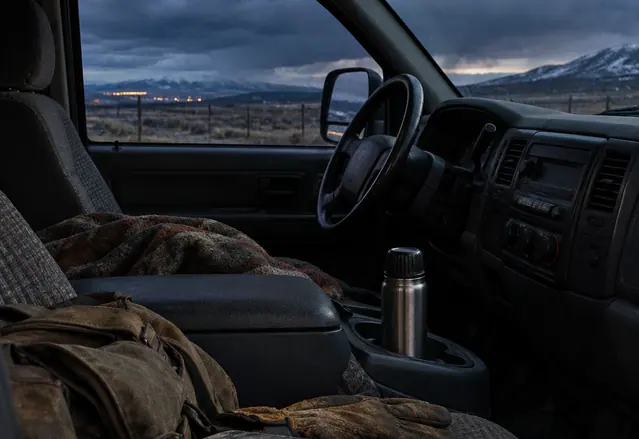
A pickup cab allows conversation to stop while keeping its participants together. Dashboard light defines a small interior; the low radio gives silence a texture; the road continues regardless of whether either person finds the next sentence.
Road-Bound Conversation in Carved in Stone and Once a Cowboy
In Carved in Stone and Once a Cowboy, the relevant drives carry the leads along two-lane plains roads after town falls behind. One occupies the driving position, the other shares the cab; attention divides between the road ahead and the conversation beside it. Keeping the destination general preserves what the journey may decide.
The useful comparison is with a confrontation in town. A porch supplies a threshold. A street supplies witnesses and routes of departure. Inside the moving truck, the next mile keeps both people within the same exchange, even when neither speaks.
That continuity gives a pause interpretive weight. Silence can register as thought, hesitation, or the effort of staying present. The reader has time to distinguish those possibilities because a change of subject need not end the scene. The cab holds the conversation open.
Stillness Lands Harder Because Nothing Is Being Won
The loud scene and the quiet scene perform different kinds of narrative work. Confrontation concentrates pressure: a feeling must become audible, a position must become clear. Routine distributes pressure across smaller acts, allowing the reader to assess conduct before anyone names its meaning.
The argument often cashes a check the still scene already wrote.
That relationship explains why an unremarkable passage can bear so much emotional weight on rereading. Once the reader knows where the attachment leads, a practical exchange becomes easier to examine on its own terms. Who allows a pause? Who continues the chore? Who accepts another person’s presence without forcing an answer?
Where Feeling Is Earned
A confrontation in these novels usually spends feeling; the kitchen, the barn, or the cab is where that feeling was earned.
This is a qualitative comparison of narrative function. Page counts and rankings would answer different questions. Here, the evidence is the connection between an earlier act of attention and the emotional credibility of a later demand.
Start the Next Novel at the Unremarkable Hour
For the next Eagle reread, leave the confession unmarked at first. Find the earliest shared routine and give its practical details sustained attention: the unfinished task, the available silence, the small accommodation that lets both people remain.
Mark the Shared Hour
Flag the first kitchen, barn, or truck scene. Read it slowly, then treat the later argument as a receipt for emotional work already completed.
Open the reread at the first page where the two leads have an ordinary task to finish together, and read that page at half speed.