Identifying the Gaps in a Kathleen Eagle Library
How do you tell, title by title, which Kathleen Eagle novels you already own, which you only borrowed, and which out-of-print copies are still worth hunting? A mental shelf list inevitably collapses when two copies share a story while featuring entirely different covers or bindings. Relying on memory alone often leads to purchasing a duplicate mass-market paperback when you actually needed the hardcover edition to complete a specific set.
The initial sorting phase requires dividing the collection into three distinct physical piles—owned, borrowed, and still-want. Dedicating about 45 to 90 minutes to this initial collection sort establishes a clear baseline of your current inventory. Organizing this initial sweep by publication date introduces unnecessary confusion, as reissue schedules frequently overlap with new releases. Grouping the physical books by their current status provides a much clearer picture of the actual gaps in the library.
Handling each book physically forces an honest assessment of the collection. A trade paperback sitting on the shelf might have a damaged spine, moving it from the permanent "owned" pile into a secondary "upgrade wanted" category. Establishing these physical stacks creates the foundation for a tracking system based on details you can verify.
Four Details Every Title Card Requires
Dedicate a single card to each distinct physical edition. Hardcover, mass-market, large print, and book-club copies each require their own dedicated record. Standardizing the data captured on each card keeps edition tracking consistent across decades of publications. Transcribing the publisher imprint and printed year directly from the physical copyright page onto standard 3-by-5-inch index cards improves accuracy. Guessing these details from memory or cover art frequently results in mismatched records, especially within the roughly 1984 through 2003 publication window.
Note the story's setting in plain reader language. Terms like ranch, reservation town, small-town winter, or reunion help Western and contemporary titles sort logically by place alongside their alphabetical arrangement. Categorization of Kathleen Eagle editions relies heavily on imprint and recurring reservation families, moving beyond basic plot summaries to capture the structural elements of the bibliography.
These four fields create a detailed profile for every volume. When a card holds the exact imprint, the verified year, the geographic setting, and the core family connections, it becomes more than a simple reminder: it is a working reference tool. This format clears up the ambiguity that often plagues informal reading lists.
Clearing the Physical Shelves First
Pull every Kathleen Eagle spine you already have and make cards from those copies first. This strict physical sweep protocol prevents the artificial inflation of the hunting list. Penciling series order notes on the cards while physically checking boxes, nightstands, and loan piles typically requires around 2 to 3 hours for a full household sweep. A borrowed paperback currently sitting on a desk still needs a card to prevent buying a third copy of that exact same edition.
Restricting the physical sweep protocol to verified copyright pages before adding unverified memory-based want cards maintains the integrity of the tracking system. Only after logging the physical books should you add want cards from titles you remember reading or meaning to read. Mark these additions as unverified until a physical copyright page or a formal catalog record confirms the specific edition details.
Confirming Unverified Editions
Cross-referencing memory-based want cards with the Library of Congress catalog provides the publisher and year data needed to complete the edition profile before you ever step foot in a used bookstore.
Completing this household inventory creates a firm boundary between what is securely owned and what remains elusive. Handling each book, opening to the copyright page, and transcribing the data solidifies your understanding of the collection's current state.
Synchronizing the Binder and the Spreadsheet
A small three-ring binder, roughly 1 to 1.5 inches thick, travels easily to used shops, library sales, and church basements. This tactile format suits active hunting in places where digital access might be limited or cumbersome. The physical binder allows for quick flipping and immediate notation while standing in a crowded aisle.
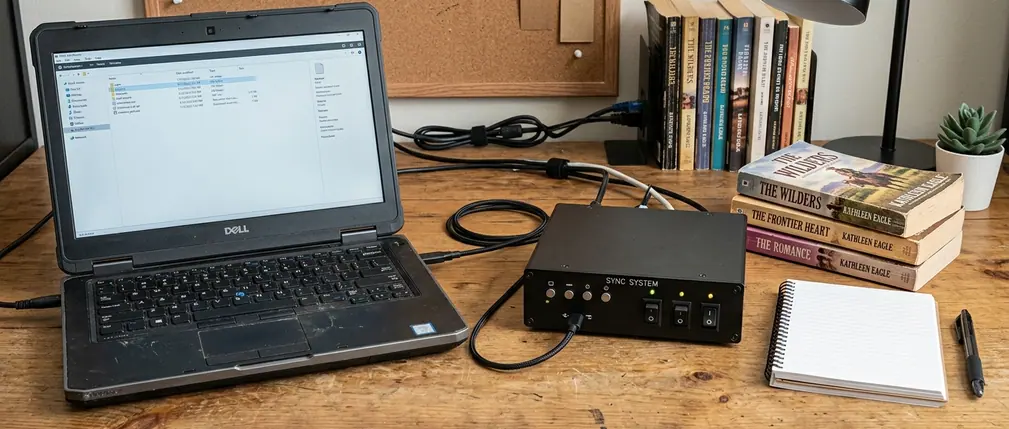
A spreadsheet using the same four fields helps you sort and analyze the collection when you are home deciding what to search for next. Setting up this matching four-column digital file keeps it in step with the physical cards. Maintaining the two formats demands consistent data entry after every shopping trip, as failing to update both will result in mismatched inventory records. Dedicating close to 10 to 15 minutes each week to synchronizing the physical binder and digital file keeps both systems aligned.
Using identical field names in both formats ensures a card and a row never drift apart conceptually. The spreadsheet highlights patterns in missing publication years or specific imprints, while the binder remains the practical tool for on-the-ground verification.
Isolating Want Cards for Field Hunts
The field strategy requires isolating the want cards to simplify the shopping experience. Carry only the want cards, or flag them with a distinct tab, saving you from flipping through already-owned titles while navigating crowded aisles. This focused approach saves time during roughly 1 to 2 hours of active aisle browsing at a local sale.
Match the publisher, binding, and cover clues on the card before committing to a purchase. Many Eagle stories underwent multiple reissues, meaning a new-to-you cover might still represent an edition you already logged at home. Verifying the copyright page against the want card remains the most reliable way to avoid accidental duplication.
Pricing Condition Notes
Jotting down the observed condition and asking prices—often around $0.50 to $4.00—directly on the want card when passing on a copy provides a useful baseline for future comparisons.
Recording these passed-over copies turns the want card into a history of availability and market pricing. When the next copy surfaces, you have immediate context for comparing its condition and cost with previous encounters.
Securing a Prairie Paperback
Lila stands at a volunteer-run used-book table in the center of a brightly lit high-school gym, her 1-inch binder open to a single cream want card. The card details a prairie-set Eagle paperback she has only ever borrowed from the county library. She picks up a mass-market copy featuring a faded windmill on the cover, immediately opening it past the title page.
She matches the publisher line and the 1996 copyright date to her handwritten notes. After a few minutes spent verifying the details and completing the transaction, she hands over two single dollar bills. Before the stack of remaining books is reshuffled by the next shopper, she clicks her pen and writes the exact find date across the bottom of the card. The binder goes home one title thicker, ready for the weekly spreadsheet sync, and her next hunt will start from a shorter want tab.